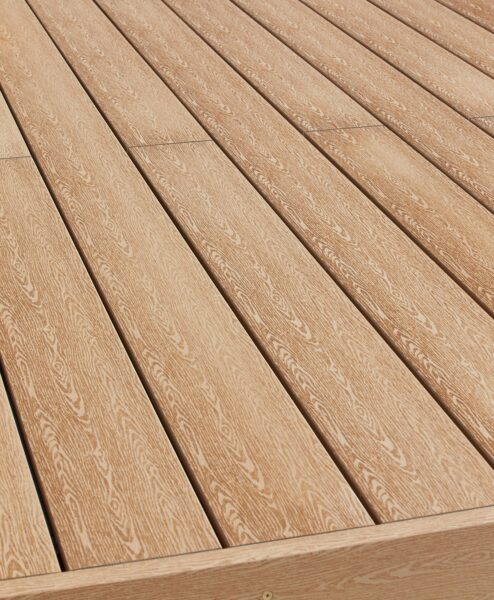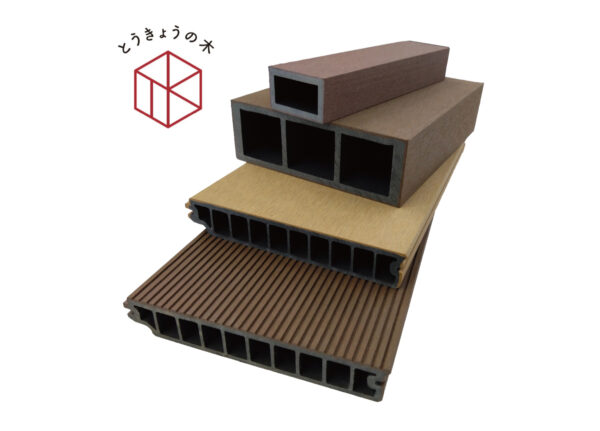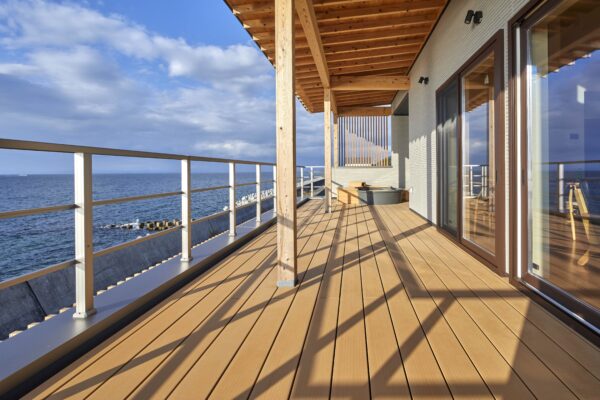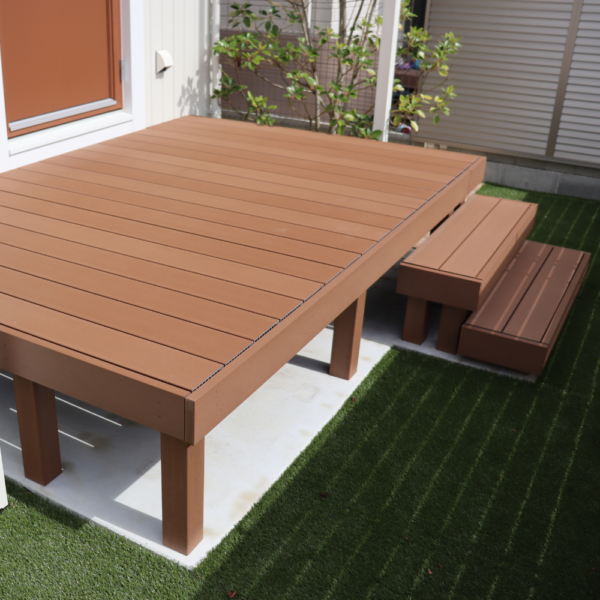

Support for Installation and Dimensional Drawing
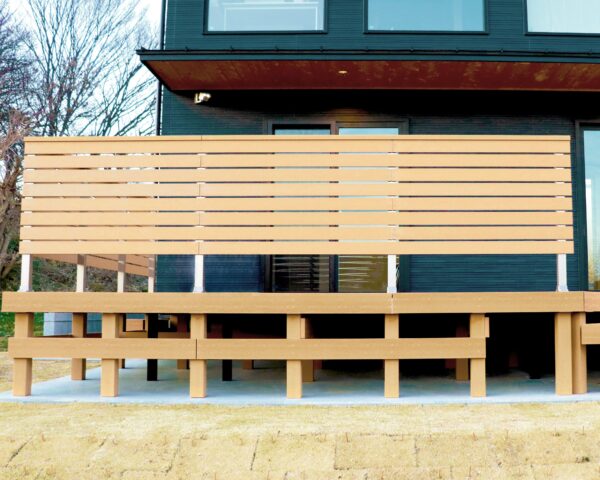
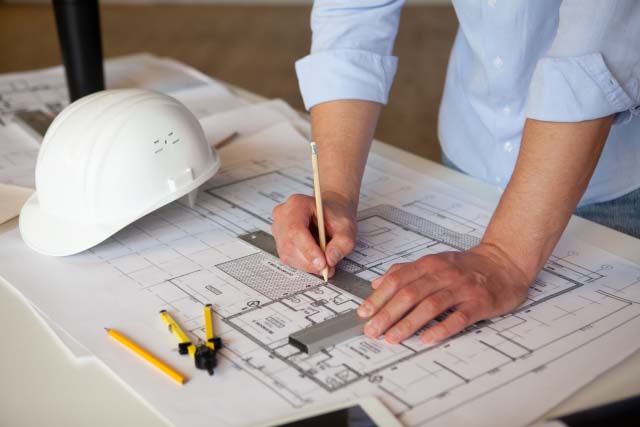
We provide comprehensive support from conceptualizing the basic design to creating detailed execution drawings (installation details, dimensions, etc.) and providing cost estimates for both materials and construction.
Self-Extinguishing Recycled Wood
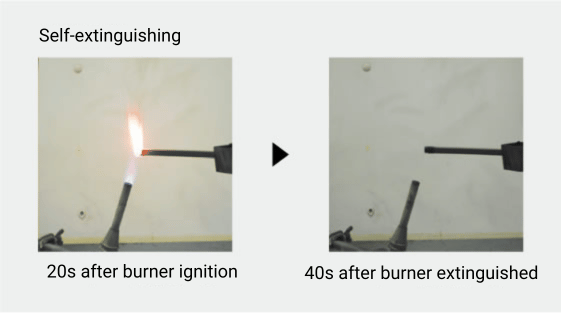
Since recycled wood is primarily based on thermoplastic plastic and wood flour, it is extremely difficult to obtain “Non-combustible Material Certification” under the Building Standards Act. However, as its use in various spaces increases, the demand for fire safety measures is rising.
Self-extinguishing refers to the property where the fire goes out naturally once the heat source is removed. While this does not qualify as non-combustible, quasi-non-combustible, or fire-retardant material under the Building Standards Act, it is effective in reducing fire risks and has been widely adopted for this reason. Leveraging our accumulated expertise, we are the first in the recycled wood industry to commercialize decks and louvers with enhanced fire safety.
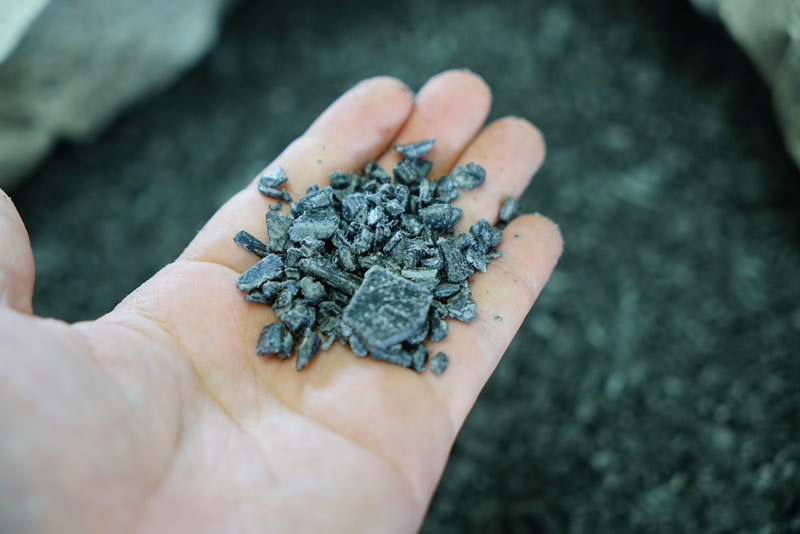
ABS Resin: Lower Thermal Expansion and Higher Strength than PP Resin
Our PLUSWOOD uses ABS resin. Compared to recycled wood made from PP resin, it features higher bending strength and flexural modulus. For the same shape, it is less prone to sagging and has a smaller coefficient of linear thermal expansion.
ABS is a material also used in automotive parts (interior/exterior) and office equipment casings because it is heat-resistant, mechanically strong, and scratch-resistant.
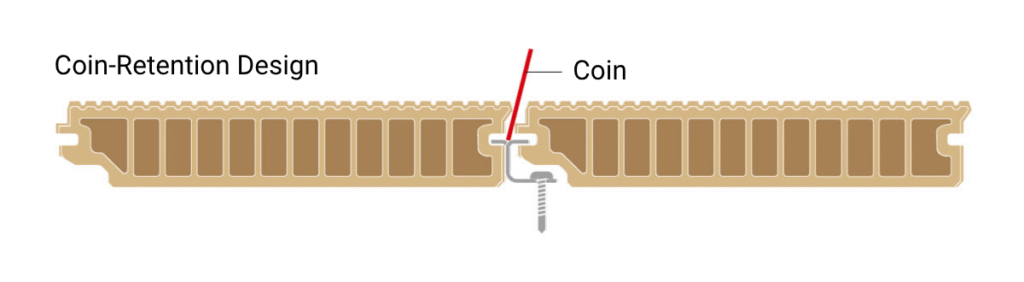
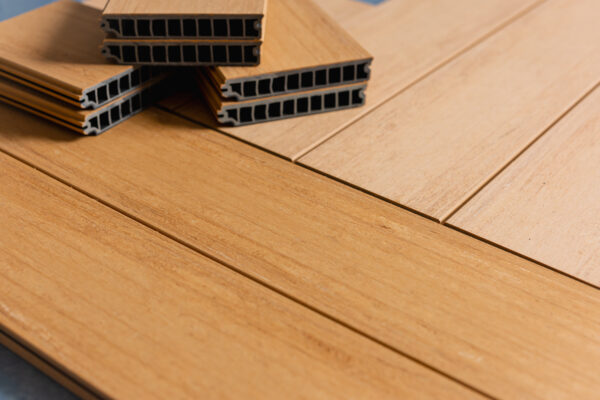
Prevention of Coins and Cards from Falling
*For Decks
Architects have praised this feature, noting:
“In schools or kindergartens, the psychological shock a child feels when they lose a 500-yen coin given by their mother is far greater than that of an adult. In that sense, this fall-prevention function is very important.”
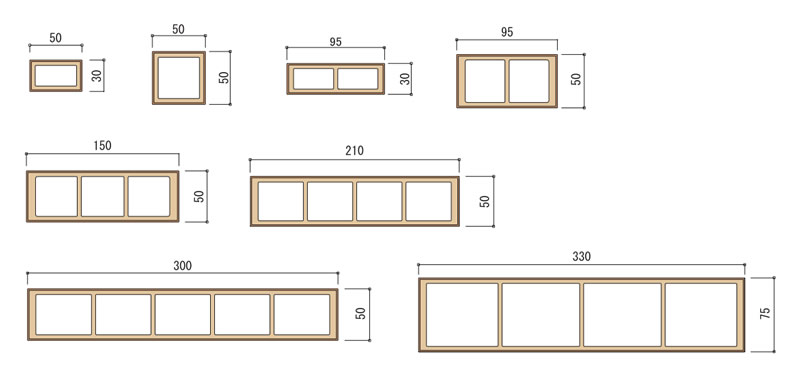
Lineup of 8 Standard Sizes
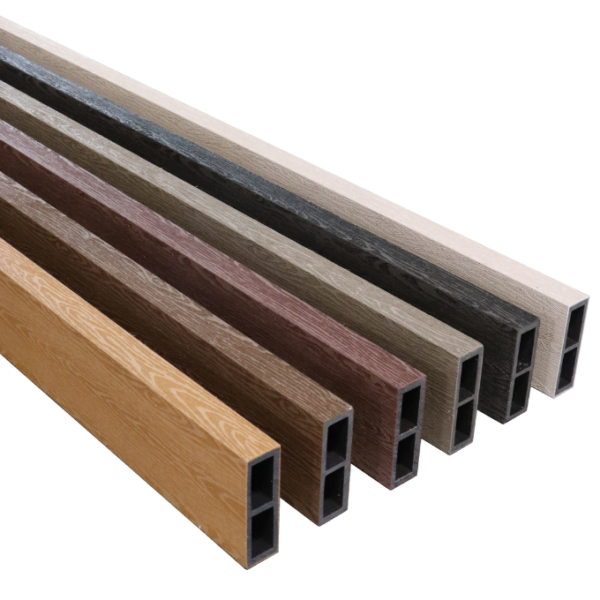
*For Louvers
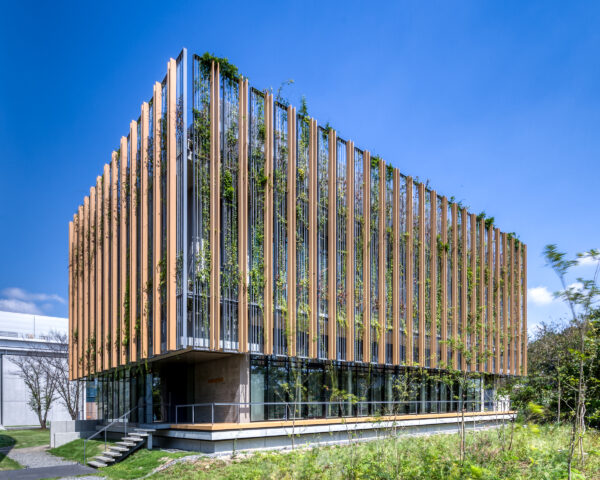
We offer 8 standard sizes, including custom sizes (50×210, 50×300, 75×330). These match various applications from large-scale facilities to residential homes. There are 6 color options, and you can choose whether or not to have a roughened finish.
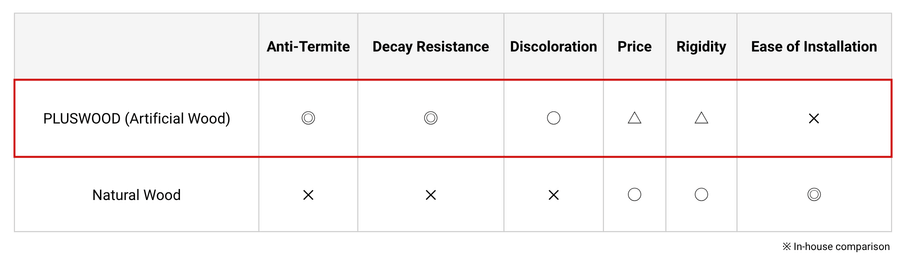
Comparison of Recycled Wood and Natural Wood
Recycled wood is resistant to decay and highly resistant to termites. It does not discolor easily and requires no regular maintenance like painting. On the other hand, it has lower rigidity than natural wood and cannot be used as a structural material. It may also split if nailed and does not have sufficient nail-holding power.
While recycled wood has its drawbacks compared to natural wood, its advantages are far greater in harsh outdoor environments.
Effective Use of Domestically Produced Thinned Wood
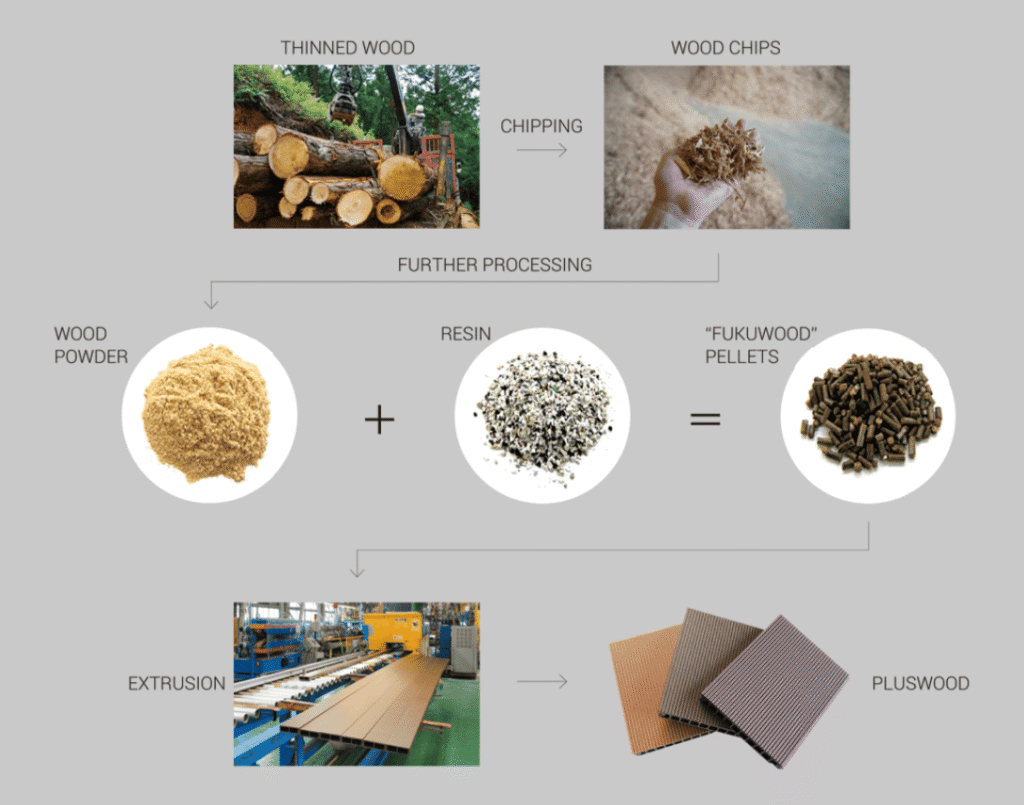
We convert thinned wood harvested from Fukui Prefecture’s forests into wood powder, then mix that wood powder with recycled plastic in-house, and we manage the entire process from raw material production to extrusion molding.