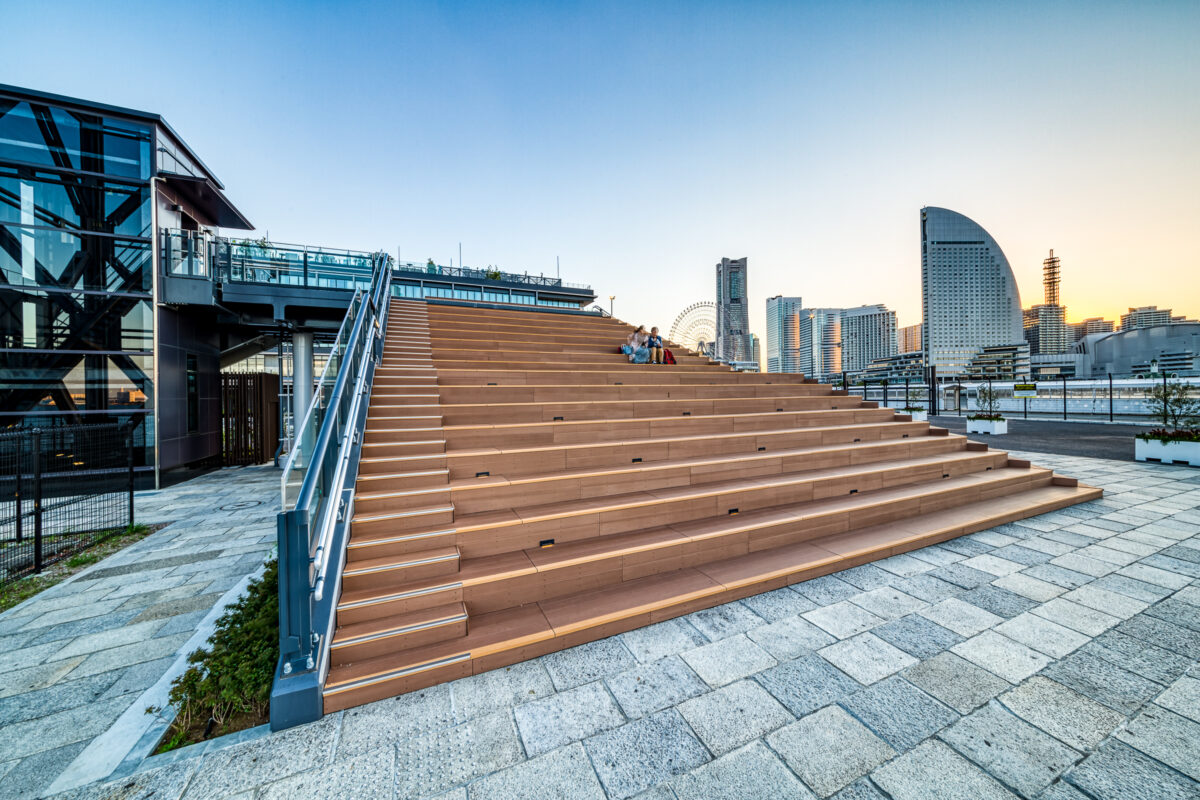
Superior Weather Resistance
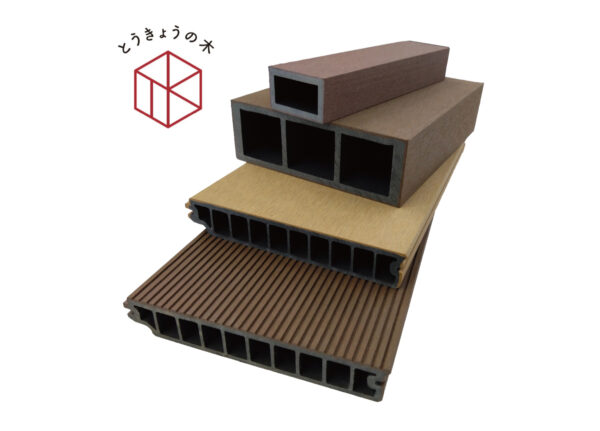
Our co-extruded hollow decking and louver products utilize different resins for the core substrate and the outer surface layer. The surface layer is made of ASA resin, which offers superior weather resistance. ASA resin is a plastic with a long track record in outdoor applications, known for its minimal discoloration and excellent long-term strength retention.
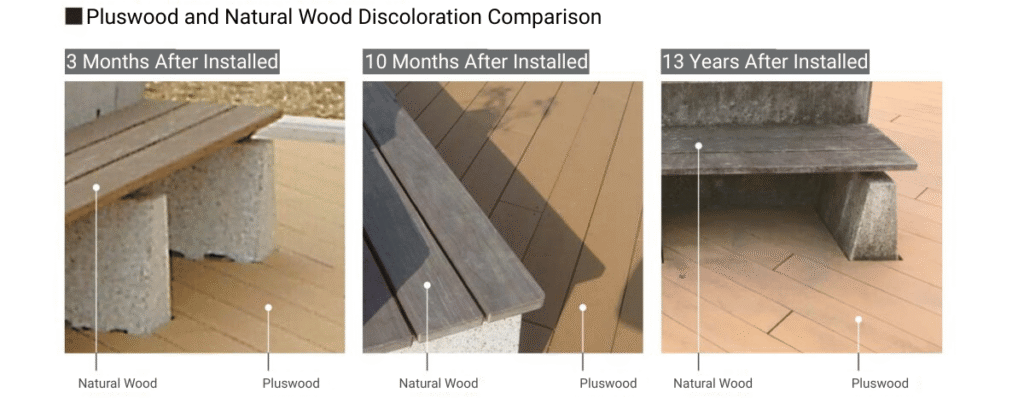
Unlike natural wood, it does not splinter or check. In an Super Accelerated Weathering Test equivalent to 30 years of outdoor exposure, it showed significantly less discoloration compared to wood, contributing to a substantial reduction in lifetime maintenance costs.
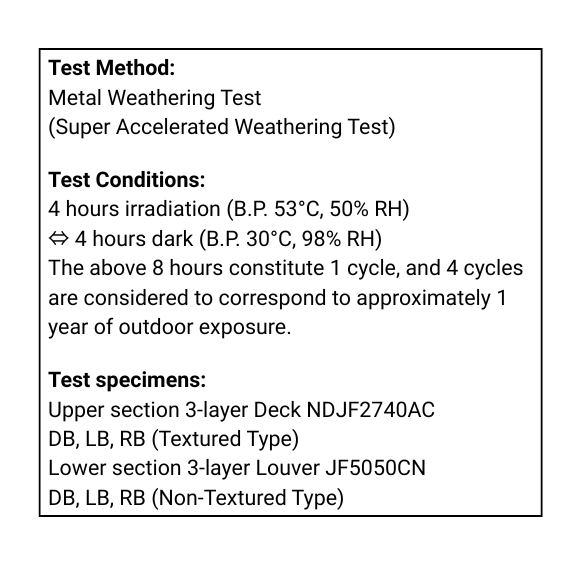
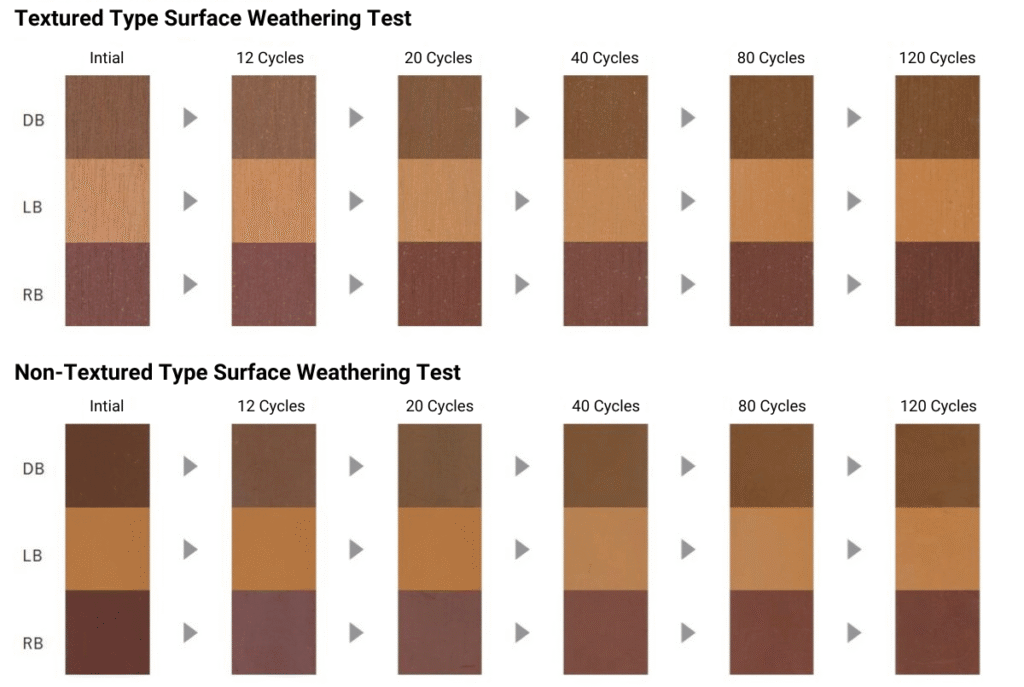
※This is an example of a test result and does not guarantee actual performance. Actual outdoor durability will be affected by regional and climatic conditions. The conditions for the Super Accelerated Weathering Test were determined internally based on outdoor exposure data, other accelerated weathering test results, and expertise from equipment manufacturers; they do not correspond to standard JIS or ISO testing regulations. Due to the printing process, actual product colors may vary from what is displayed. Actual colors may vary due to printing.
Resistant to Water-Absorption Cracking
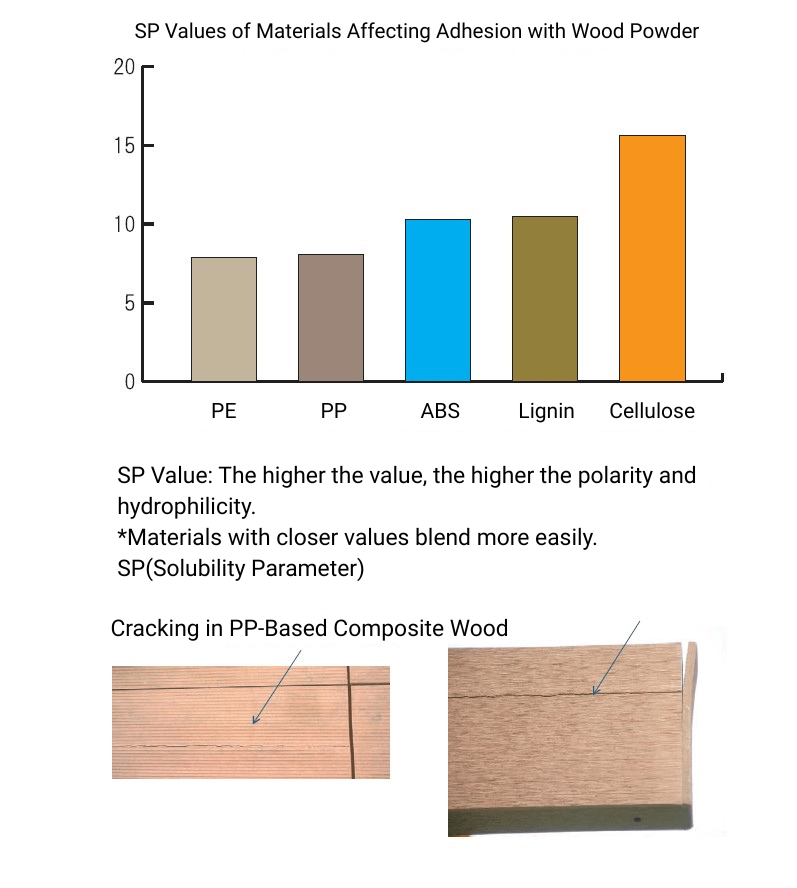
PLUSWOOD features high chemical compatibility with wood, making it exceptionally resistant to water-absorption cracking.
The ABS-based resin, which is the primary raw material of PLUSWOOD, possesses high compatibility with lignin, a major component of wood powder. This results in superior chemical bonding strength with the wood particles.
Compared to conventional PP-based composite wood, PLUSWOOD offers significantly higher interfacial adhesion with wood powder. Consequently, it is highly resistant to cracking even in outdoor environments, ensuring long-term safety and durability.
High Strength & High Rigidity
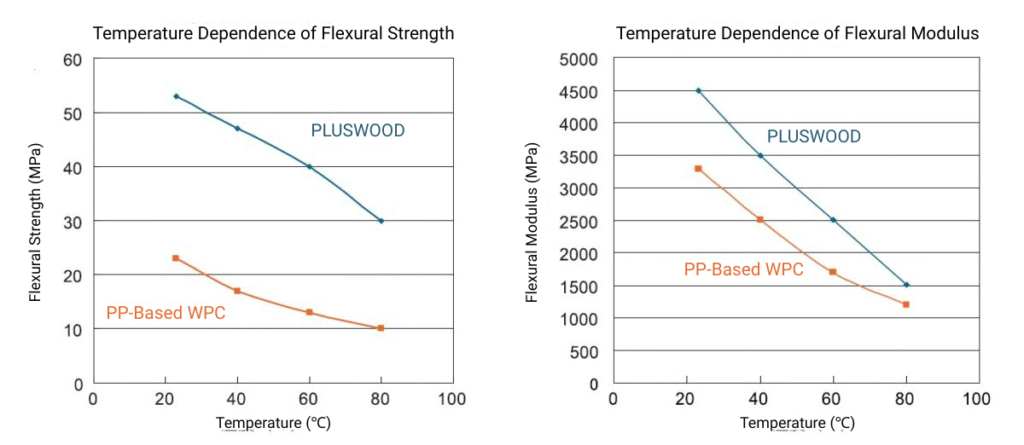
Because PLUSWOOD utilizes an ABS-based resin, it possesses higher flexural strength and a higher flexural modulus compared to conventional PP-based composite wood. This means that given the same shape, PLUSWOOD offers greater ultimate strength and is far less prone to sagging or deflection.
The graph below illustrates the temperature dependence of both flexural strength and flexural modulus, demonstrating that PLUSWOOD maintains superior mechanical strength over PP-based composite wood across various temperatures.
Decay Resistant
Even after a 12-week forced decay test using Fomitopsis palustris and Trametes versicolor, no decay occurred, demonstrating high preservative performance.
Preservative Performance Test Results※
| Test Specimen | Test Fungus Name | Mass Loss Rate | Evaluation |
|---|---|---|---|
| Pluswood Solaie Deck | Fomitopsis palustris (Brown rot) | 0% | 〇Resistant to decay |
| Trametes versicolor (White rot) | 0% | ||
| Natural Wood | Fomitopsis palustris (Brown rot) | 14.7% | ×Susceptible to decay |
| Trametes versicolor (White rot) | 24.3% |
※Test conducted via a forced decay test using brown-rot fungus Fomitopsis palustris and white-rot fungus Trametes versicolor based on JIS K-1571 (2010).
※The data listed are representative examples measured by a third-party institution based on the test method and are not guaranteed values.
Termite Resistant
PLUSWOOD has a structure where wood powder is encapsulated by resin. Even after a 3-week forced feeding test with termites, there was no damage at all, demonstrating high anti-termite properties.
Anti-Termite Performance Test Results※
|
Test Specimen |
Mass Loss Rate |
Evaluation |
|---|---|---|
|
Pluswood Solaie Deck |
0% |
〇 Less susceptible to insect damage |
|
Natural Wood (Cedar) |
11.5% |
× Susceptible to insect damage |
※Test conducted via a forced feeding test using Formosan white ant based on JIS K-1571 (2010) “Performance standards and test methods for wood preservatives.”
※The data listed are representative examples measured by a third-party institution based on the test method and are not guaranteed values.