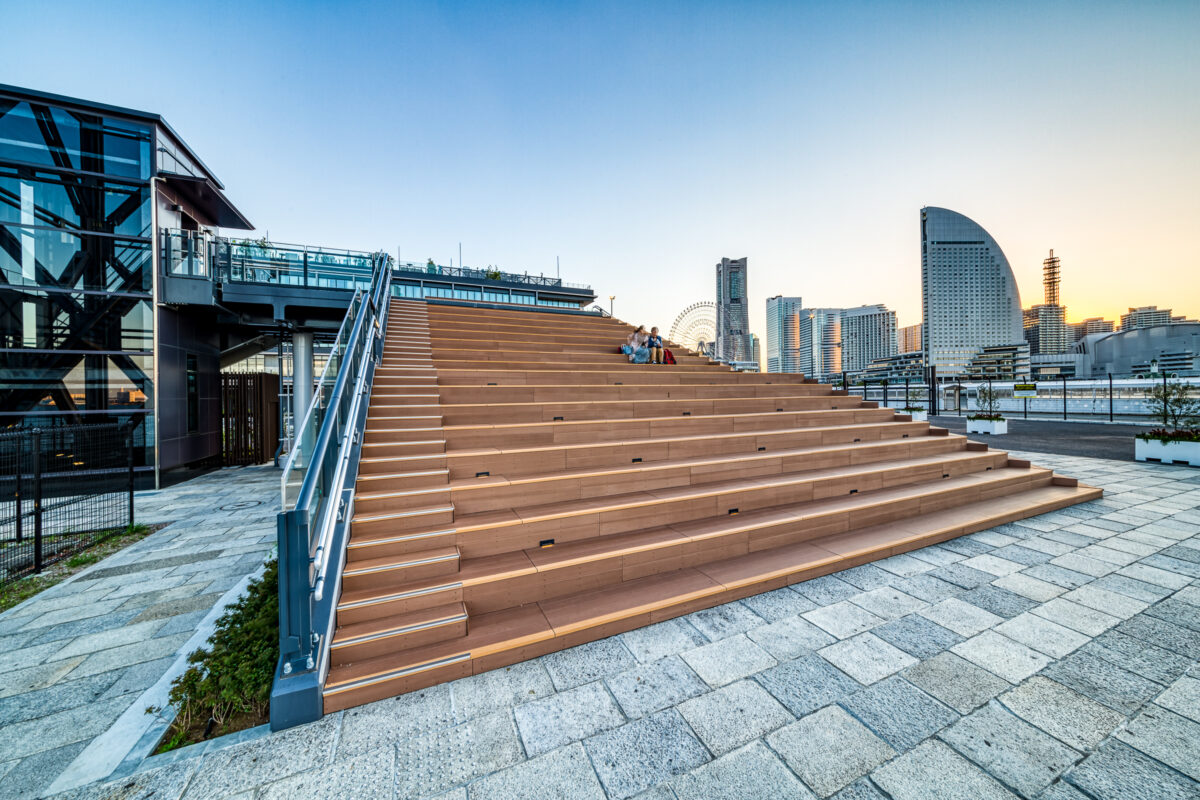

CO₂ Fixation and Wood Utilization
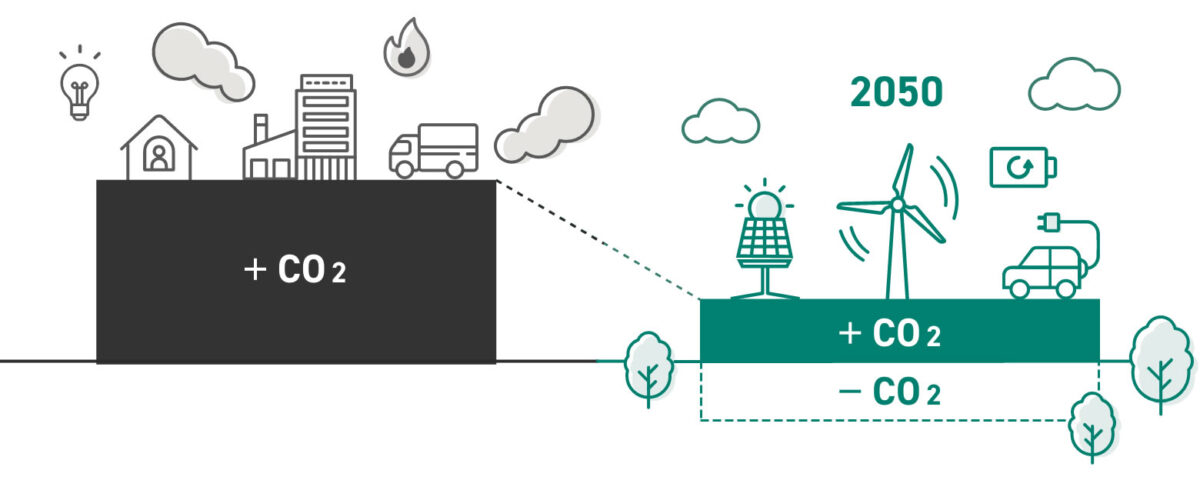
“Balancing Greenhouse Gas Emissions and Removals”
Toward the realization of carbon neutrality, the government has set the above target to be achieved by 2050.
Trees absorb CO₂ during their growth period, and as long as they do not rot or get burned, that CO₂ is not released into the atmosphere.
Utilizing wood in buildings means reducing CO₂ emissions to the Earth until the end of the building’s lifespan.
Source: Ministry of the Environment Website
Wood Utilization and PLUSWOOD
Recycled Wood for Carbon Sequestration
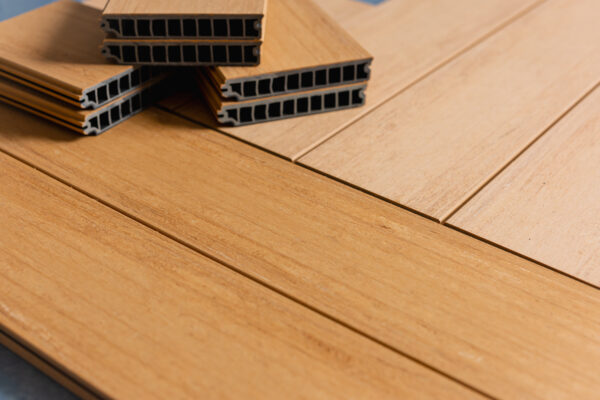
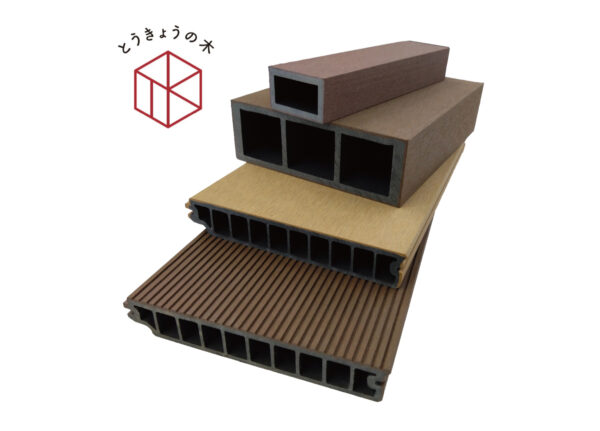
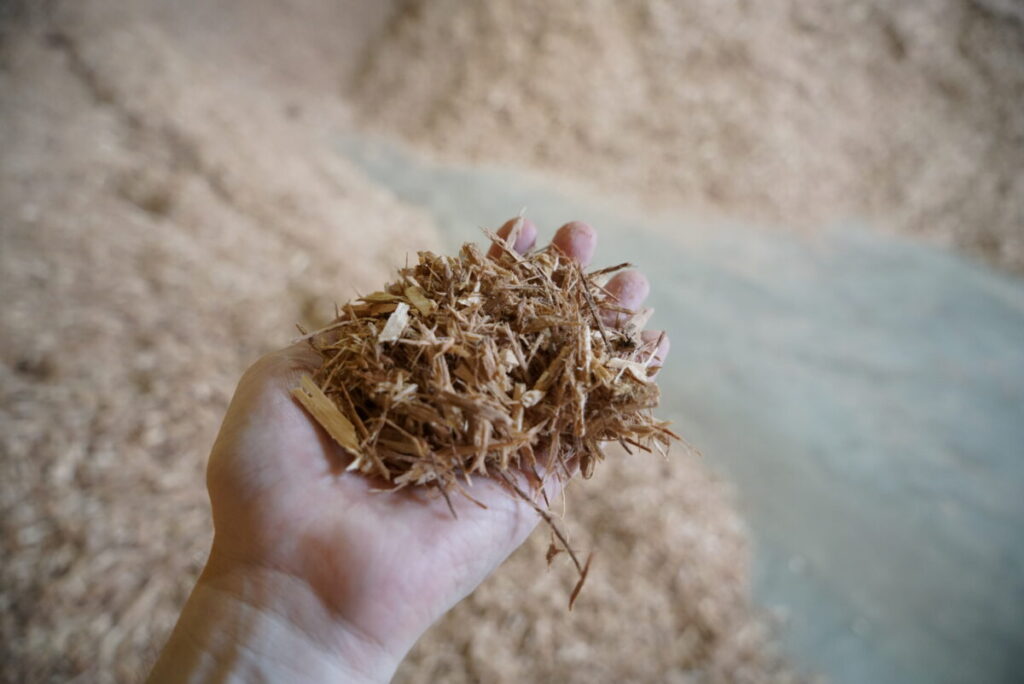
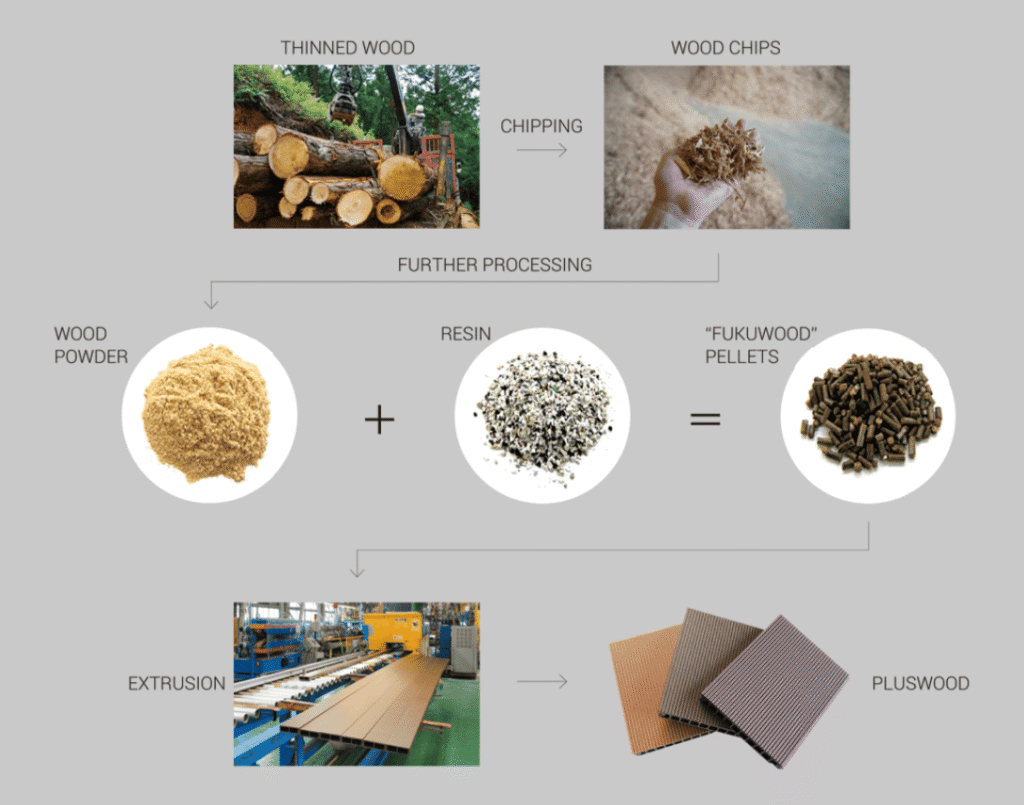
PLUSWOOD utilizes wood from various local sources, including timber from Fukui Prefecture, as well as wood cleared and processed into wood flour directly from construction sites.
While it does not fully equal the carbon storage capacity of an equivalent volume of natural timber, it still significantly contributes to carbon fixation.
Although natural wood offers unique inherent qualities such as its natural aroma and grain, concerns remain regarding its long-term outdoor durability and ongoing maintenance costs—particularly when exposed to rain and UV rays.
For these reasons, PLUSWOOD recycled wood continues to be the preferred choice in the market, delivering effective carbon sequestration alongside exceptional long-term durability.
Why is Forest Thinning Necessary?
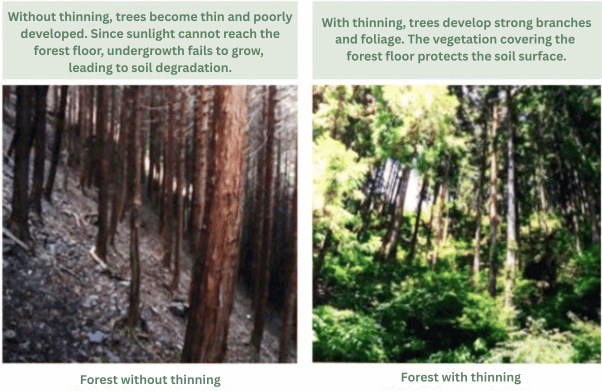
Thinning allows sunlight to reach the forest floor. As a result, smaller plants and vegetation grow between the planted trees and cover the ground, which enhances the multi-functional benefits of the forest ecosystem.
Without thinning, the tree canopy will move upward in the wind, causing the trunks to become thin and weak, creating a fragile, “bean-sprout-like” forest. Furthermore, when sunlight cannot reach and understory vegetation is lost, there is a serious risk of soil erosion caused by rainfall. Thinned forest have thicker trunks and deeper roots, allows lush ground vegetation to thrive, and becomes highly resilient against natural disasters.
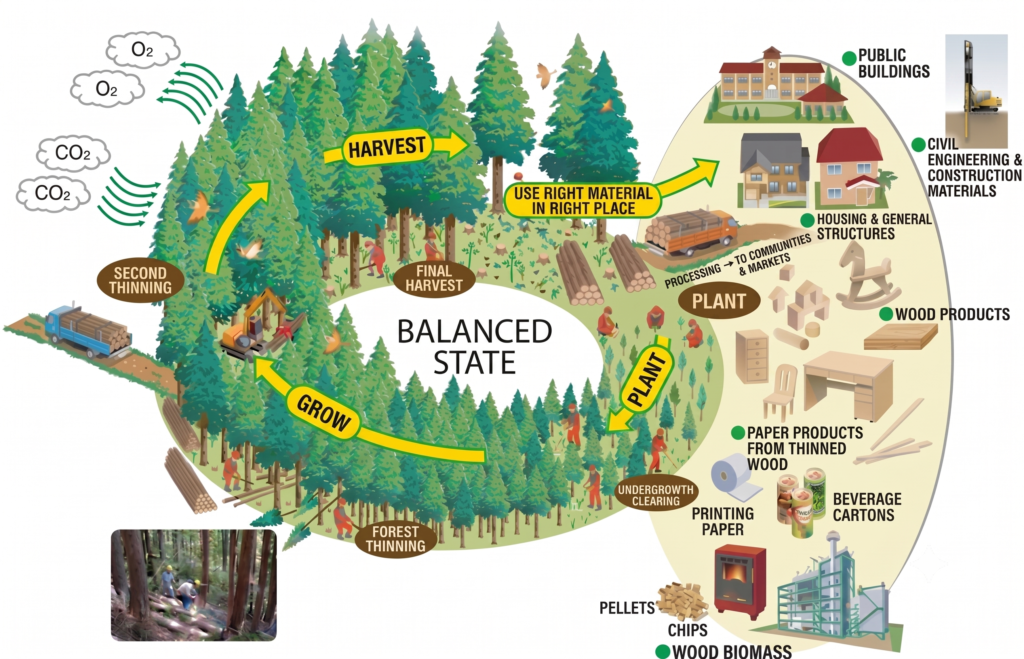
Source: “The Wood Industry’s Role in the Sustainable Lifecycle of Forest Resources” (Forestry Agency of Japan)
Obtained The SuMPO Environmental Label
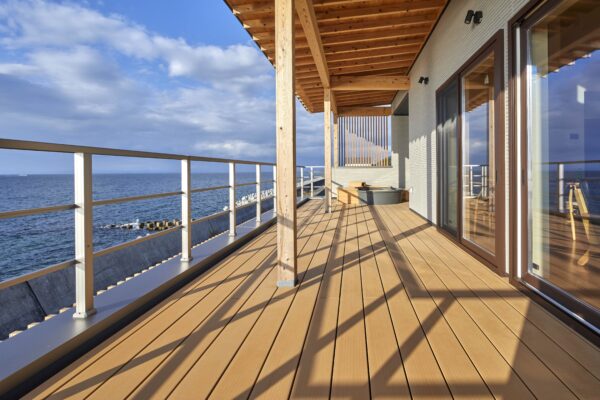
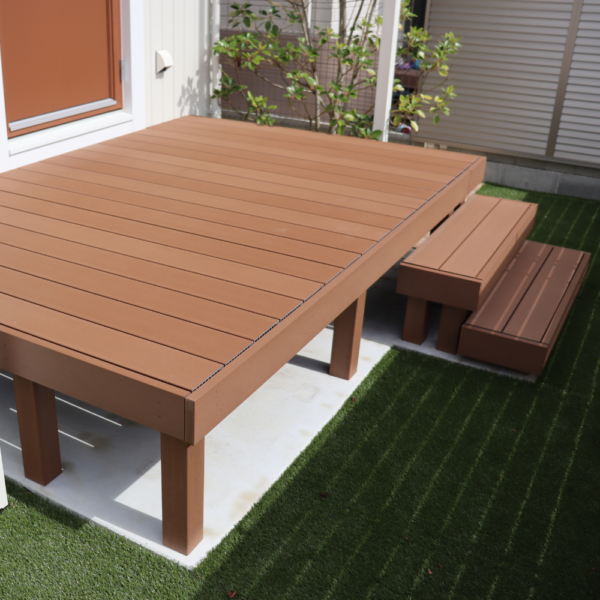
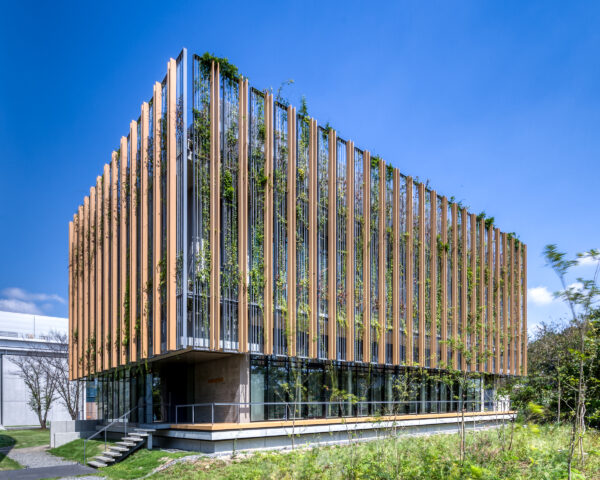
PLUSWOOD has obtained the SuMPO Environmental Label Program (formerly Eco Leaf Environmental Label) for Deck ND and Louvers JF3050CA / JF3050CN. By visualizing the product’s environmental footprint, it contributes actively to carbon reduction.
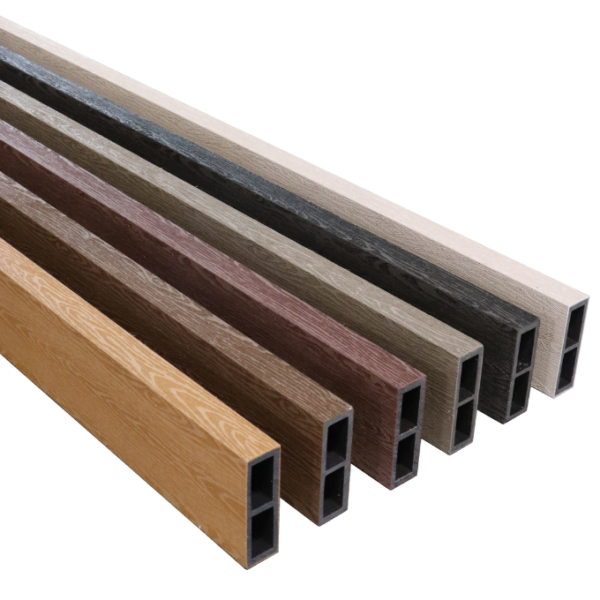
The environmental calculations are based on the entire installation assembly (including underdriven joists and support pedestals) for Decking ND, and per single extruded unit (4-meter length) for the Louver products.
The SuMPO Environmental Label Program is an environmental label that uses LCA (Life Cycle Assessment) methods to multi-facetingly and quantitatively evaluate and disclose environmental characteristics across all life cycle stages of a product, from resource extraction to manufacturing, logistics, use, disposal, and recycling. It corresponds to Type III (ISO 14025).
Products that have obtained the SuMPO Environmental Label Program serve as a criterion
for building owners and contractors engaging in Green Procurement. Furthermore, utilizing these certified products contributes to earning points under the LEED certification system, managed by the U.S. Green Building Council (USGBC).